Unesco Global Geopark Scheldt Delta
Discover Brabantse Wal in the Unesco Global Geopark Scheldt Delta

The Belgian-Dutch Scheldt Delta Geopark was officially awarded the UNESCO Global Geopark designation in March 2024! The Scheldt estuary now has the honour of being designated a UNESCO Global Geopark, thanks to its unique geological, cultural-historical and landscape features. This signifies international recognition for this exceptional area, comparable to places such as the black volcanic beaches of Lanzarote, the geothermal activity of Iceland and the Colca Canyon in Peru.

Aunique region
Nowhere else in the world is the interplay between people and water – both their cooperation and their conflict – as visible in the landscape as in the Flemish-Dutch Scheldt Delta. Striking a balance between what is beneficial and what is necessary in this dynamic landscape is difficult, and deserves all the attention that Geopark status affords.
Geosites on the Brabantse Wal
The Brabantse Wal forms part of the UNESCO Global Geopark, and the three municipalities are partners in the Scheldt Delta Geopark. In western West Brabant, there are a number of geosites: the Brabantse Wal, Grenspark Kalmthoutse Heide, het Markiezaatsmeer, the Dintelse Gorzen and the Beekdal. Het Markiezenhof will serve as one of the six visitor centres in the Geopark. Curious about the whole area? Take a look at the map of the Geopark area.
Cross-border network
The Geopark’s designation is the result of collaboration between five provinces – Zeeland, North Brabant, Antwerp, East and West Flanders – and more than 60 municipalities, together with various research institutions, museums and tourist boards. It is a testament to international cooperation between public and private sector partners. The Geopark covers an area of 5,500 km² and comprises 63 partner municipalities, with a total population of around 1,500,000. It stretches across the provinces of Zeeland and North Brabant in the Netherlands, and West Flanders, East Flanders and Antwerp in Belgium. It also includes the Oosterschelde National Park.

-
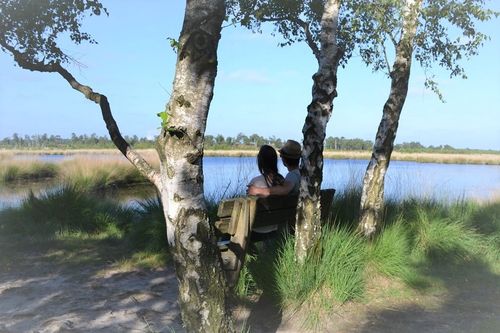
Discover Unesco Global Geopark
-
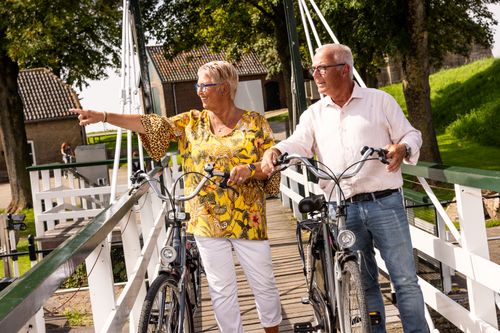
Cycling routes on Brabantse Wal
-
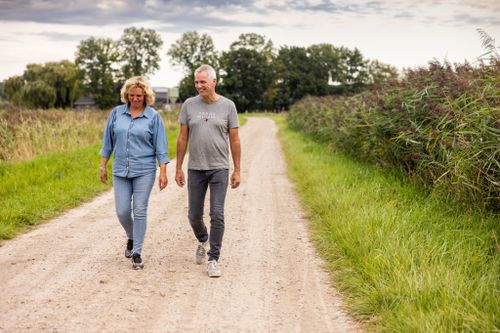
Walking routes on Brabantse Wal
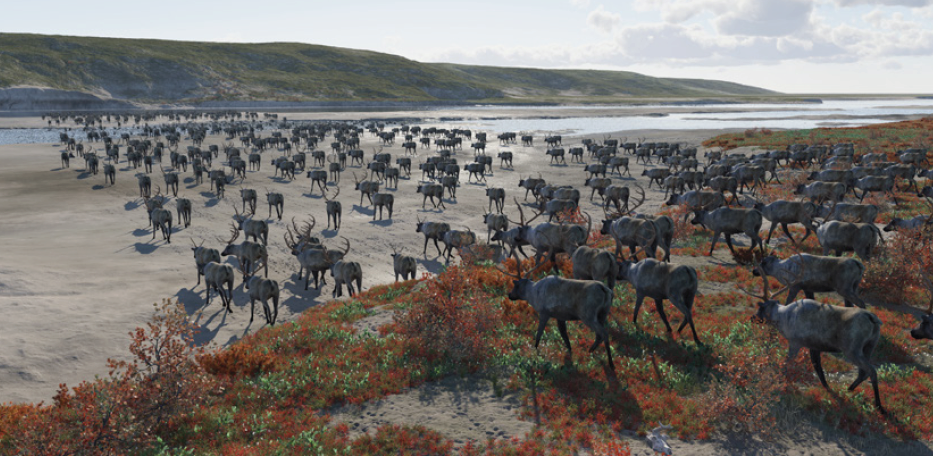
Reindeer roaming the tundra
The landscape of Brabantse Wal has changed many times. But what did it look like 15,000 years ago? Willem de Weert wrote a nice article about it.